

Introduction
A social media influencer is no longer just someone who posts photos and recommends products. Successful influencers build communities, tell stories, entertain their audiences, and shape purchasing decisions, trends, and even perceptions of specific brands. Consequently, there is usually far more work behind a successful profile than a single post might suggest.
The scope is vast. Some influencers focus on fashion and beauty, while others cover gaming, technology, fitness, travel, cooking, finance, or family life. Some have millions of followers, whereas so-called micro-influencers—with significantly smaller communities—can also build highly valuable relationships with their audiences.
Becoming an influencer does not automatically mean becoming famous. Far more important are a clear personal direction, credible content, and a community that genuinely trusts the recommendations. Anyone taking this profession seriously must be creative, communicative, organized, and willing to learn.
1. What exactly is a social media influencer?
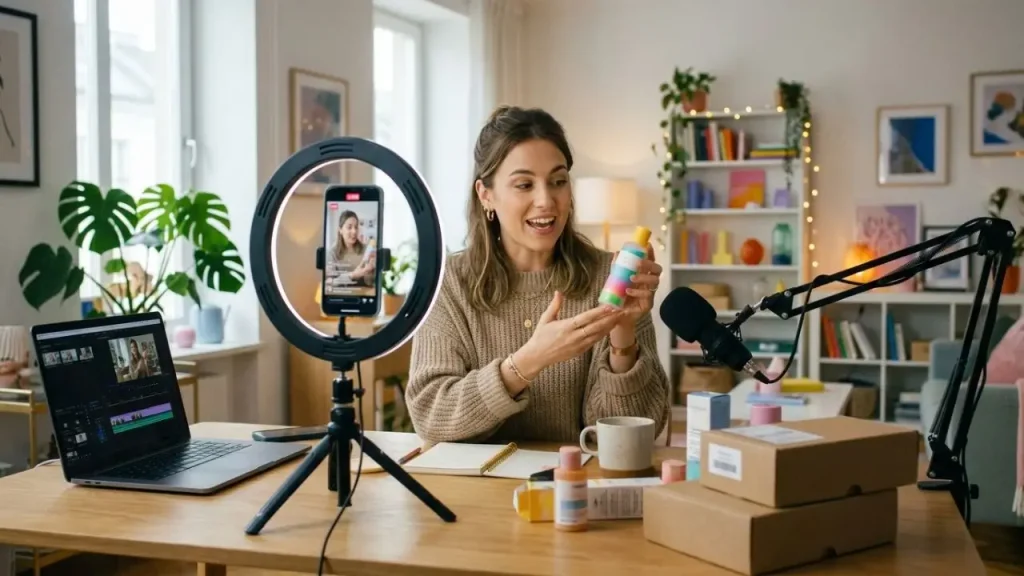
A social media influencer is someone who regularly publishes content on social platforms, thereby influencing the interests, opinions, or decisions of their followers. This influence can stem from expertise, entertainment value, personality, experience, or a particularly strong connection with the community.
The term “influencer” is often associated with large follower counts. However, that is only part of the story. A person with 20,000 engaged followers can be more valuable to a specific brand than a profile with a million followers if the smaller community aligns perfectly with the desired target audience. Ultimately, what matters is not just the size, but the quality of the relationship between the creator and the audience.
Different Types of Influencers
Influencers can be categorized based on various criteria. Nano-influencers, for instance, have a very small community but are able to cultivate particularly personal relationships with their followers. Micro-influencers reach larger groups and often focus on specific topics or interests.
Then there are larger creators who reach a broad audience with their content. Macro- and mega-influencers can achieve enormous reach and are therefore frequently employed for major campaigns. At the same time, as a community grows, so does the challenge of remaining personal and authentic.
Thematic specialization is also important. A tech influencer might talk about smartphones and computers, while a fitness creator covers workout routines and nutrition. The clearer the focus, the easier it is for viewers to understand why they should follow a particular profile.
2. How do social media influencers make money?
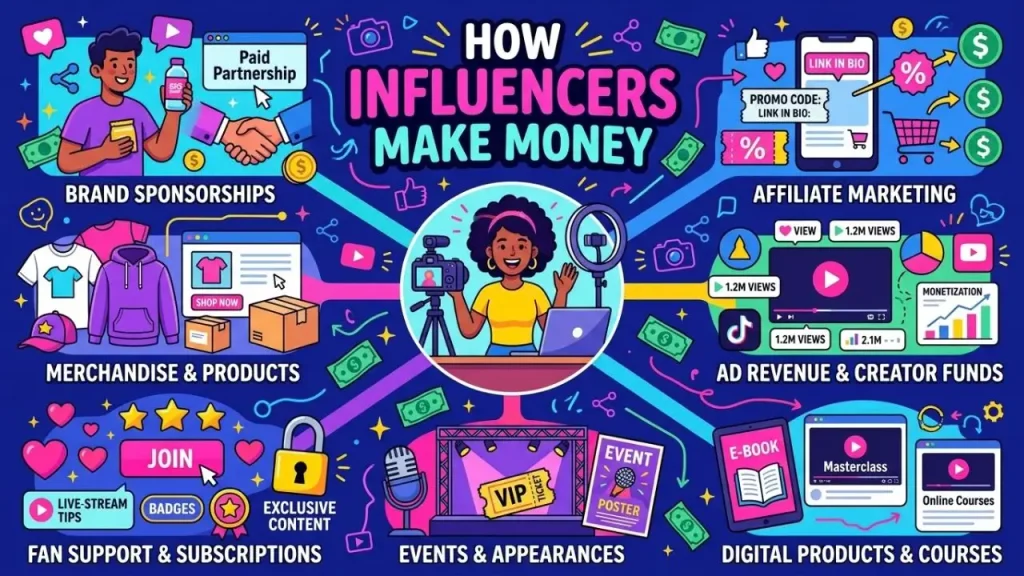
Influencers can generate income in various ways. One of the most well-known methods is paid partnerships with companies. In these arrangements, the creator is paid to showcase a brand, product, or service in a post, video, or other form of content.
However, a partnership should align with the creator’s community. If an influencer suddenly recommends products that have nothing to do with their usual niche, follower trust can quickly suffer. For example, a fitness creator who regularly talks about exercise comes across as more credible when promoting a relevant sports brand than when advertising a completely unrelated product without any apparent connection.
In the case of paid collaborations, influencers must transparently disclose their connection to a brand. Properly labeling advertising is therefore an important part of professional influencer work.
Another source of income is affiliate programs. In this model, the influencer typically receives a commission when users purchase a product or complete another desired action via a specific referral link. This method can be particularly appealing for creators who regularly test products or offer recommendations.
Additional Revenue Streams
Influencers can also sell their own products or services. Examples include digital courses, e-books, templates, consulting services, memberships, or physical products. A major advantage of having one’s own offering is that the creator is not solely dependent on advertising partners.
Platforms themselves may also offer monetization opportunities under certain conditions. These can include revenue from advertising, subscriptions, memberships, or fan support. However, the specific options vary depending on the platform, country, account type, and applicable program terms.
Anyone wishing to work as an influencer in the long term should look beyond just individual paid posts. A more stable business model often emerges when multiple revenue streams are combined.
3. How do you build a strong community?

A large following does not happen automatically just by posting regularly. People follow social media influencers because they expect specific value, entertainment, inspiration, or a personal connection. Quality content gives the audience a reason to come back.
Authenticity plays a key role here. This does not mean making every private moment public; rather, it is about the personality behind the profile coming across as genuine. Creators can maintain a professional image while still appearing relatable. Sharing personal experiences, mistakes, opinions, and stories can make content more engaging.
Communicating with the community is also essential. Responding to comments, addressing questions, or reacting to feedback can foster a stronger connection. Followers should not feel like they are merely numbers on a screen.
Trust Takes Time
Trust is rarely built through a single successful post; it develops through many small interactions. When an influencer speaks honestly about products on a regular basis—including mentioning any downsides—subsequent recommendations come across as more credible.
This also means not accepting every collaboration. A lucrative offer might be attractive in the short term but problematic in the long run if the product doesn’t resonate with the community. Personal credibility is an asset that is difficult to regain once lost.
A good influencer therefore considers more than just what they want to publish. They also ask: “Why would my community find this interesting?” This perspective significantly changes the quality of the content.
4. What skills does a social media influencer need?
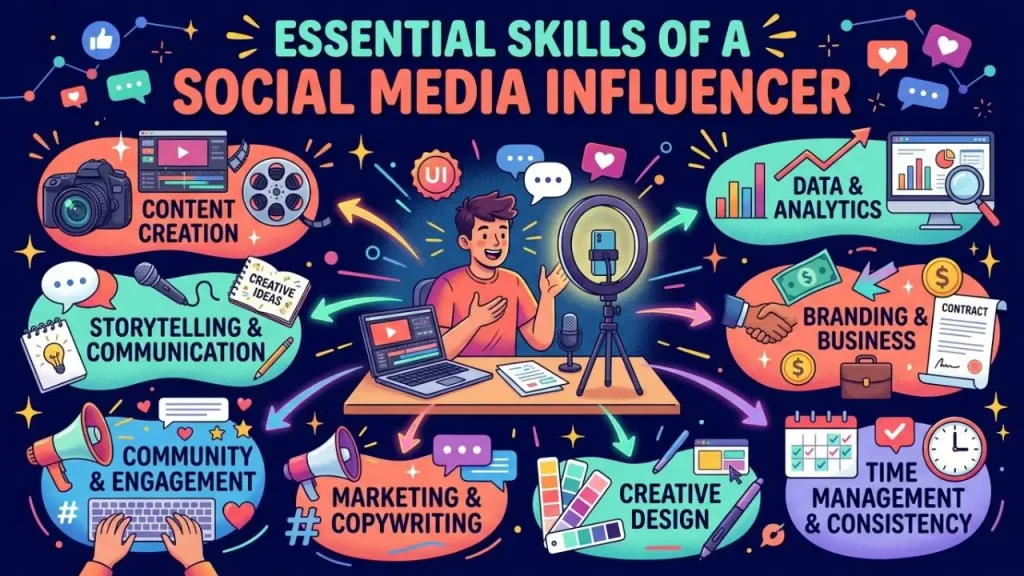
Successful influencers combine a range of skills. Creativity often tops the list, as coming up with new content ideas on a daily or regular basis can be demanding. At the same time, creativity alone isn’t enough. A creator must know how to present an idea clearly and transform it into a format that suits the specific platform.
Communication is also crucial. A good video, a compelling caption, or an engaging livestream requires a clear message. Being able to explain complex topics simply is a major advantage—especially for influencers in fields like technology, education, finance, or health.
Organization is often underestimated. A single video can involve planning, research, filming, editing, design, publishing, and audience interaction. When collaborations and business tasks are added to the mix, the work can quickly come to resemble running a small business.
Learning is Part of the Job
Platforms and audience habits are constantly changing. That is why an influencer must be willing to try out new formats and learn from the results. Content that performs well today won’t necessarily have the same impact a few months down the line.
At the same time, you shouldn’t blindly follow every short-lived trend. While trends can offer new opportunities, a strong personal brand requires a distinct identity. Constantly trying to copy other creators makes it harder for you to stand out and be recognized.
Foundational skills in photography, video editing, storytelling, presentation, and business communication can also make a huge difference. You don’t need to be a pro in every area; what matters is a willingness to keep developing and growing.
5. How can you get off to a successful start as a social media influencer?

The first step is to choose a topic you can talk about in the long run. It shouldn’t just be interesting right now; it needs to offer enough scope for a variety of content. For instance, if you love technology, you could review smartphones, share tips, compare accessories, and explain technical developments.
Next, consider who your content is intended for. A profile aimed at teenagers will likely look different from a channel designed for working parents or tech enthusiasts. The better you understand your target audience, the easier it is to select relevant topics.
In the beginning, try not to focus too much on follower counts. A small group of engaged followers can be more valuable than a large number of passive accounts. Instead of constantly obsessing over growth, ask yourself whether the content you’re publishing is genuinely helpful, interesting, or entertaining.
Quality and Consistency
Consistency does not mean having to publish something every day. A realistic publishing schedule is better than an overly ambitious one that is abandoned after a few weeks. For instance, someone who produces high-quality content twice a week may fare better in the long run than someone who posts daily but quickly loses motivation.
Technical quality should also be adequate. A smartphone, good lighting, and clear audio are perfectly sufficient for many formats. Expensive cameras are no substitute for an interesting idea. It is only worth investing heavily in equipment once the content itself is working well.
Another important aspect is legal and business responsibility. Paid partnerships, affiliate recommendations, and other commercial content must be labeled in accordance with applicable regulations. Influencers should also exercise caution when using third-party images, music, videos, and trademarked material.
The Biggest Challenges for Influencers
Life as an influencer often looks easy from the outside, but it can be very labor-intensive. The constant expectation to produce new content can create pressure. At the same time, public communities do not always react positively; criticism, negative comments, and personal attacks can take an emotional toll.
Dependence on platforms is another challenge. Changes to features, rules, or monetization programs can impact a creator’s work. Therefore, it is wise not to rely exclusively on a single platform or source of income.
Data privacy and personal boundaries should also be taken seriously. Influencers decide for themselves which parts of their lives to make public. One should carefully consider what information really needs to be shared—especially regarding family members, children, location details, and personal contacts.
Conclusion
Being a social media influencer involves far more than simply posting pictures or videos on a regular basis. Successful creators build trust, understand their community, and develop content that gives people a genuine reason to follow them.
The best opportunities arise where personal interests, skills, and a specific audience intersect. A clear thematic focus makes it easier to establish a recognizable identity, while authentic communication helps build long-term relationships with followers.
There are also various financial opportunities, ranging from brand collaborations and affiliate revenue to one’s own products and services. However, anyone aiming for lasting success should treat their profile as a serious creative and business endeavor.
Ultimately, an influencer’s value is not determined solely by their follower count. Trust, credibility, quality content, and an engaged community are often far more important. Those willing to learn continuously and develop their own unique voice can turn social media into a long-term career opportunity.
Frequently Asked Questions About Social Media Influencers
1. What is a social media influencer?
A social media influencer is someone who regularly publishes content on social platforms and is thereby able to influence the interests, opinions, or decisions of their community.
2. How many followers do you need to become an influencer?
There is no fixed minimum number. Even individuals with just a few thousand—or fewer—followers can work as influencers, provided their community is engaged and trusts their recommendations.
3. How do social media influencers make money?
Potential revenue streams include paid collaborations, affiliate programs, platform monetization, proprietary products, digital offerings, consulting services, and memberships.
4. What topics are suitable for influencers?
Suitable topics include fashion, beauty, gaming, technology, fitness, travel, cooking, education, books, finance, and many other areas. The crucial factor is that the creator can speak authentically about the topic.
5. Can you become an influencer without an expensive camera?
Yes. A modern smartphone is sufficient for much of the content. Good lighting, clear audio, and an interesting idea are often more important than expensive camera equipment.
6. How do you gain your first followers?
Helpful and interesting content, regular posts, and genuine interaction with other users can help build an initial community. Patience is key in this process.
7. What is a micro-influencer?
The term “micro-influencer” generally refers to creators with a relatively small, niche community. Their reach is smaller than that of major influencers, but their followers can be particularly engaged and highly relevant to the specific topic.
8. Do influencers have to label advertisements?
Disclosure requirements may apply to commercial content. Influencers should be familiar with the applicable legal and platform-specific rules and be transparent about paid partnerships.
9. Is being an influencer a full-time job?
Yes, for some people, being an influencer has become a full-time profession. However, many creators need time initially to build a community and establish stable sources of income.
10. What defines a successful influencer?
Credibility, good communication skills, creative content, consistency, and a genuine understanding of one’s community are among the most important factors. A large number of followers alone does not guarantee long-term success.