
Introduction
The search for good business ideas rarely begins with a perfect concept. Often, it stems from a simple problem: people need something, companies are looking for a better solution, or a particular service is inadequately provided in a specific region. This is precisely where a great opportunity for entrepreneurs lies. A successful business idea does not have to be entirely new; it simply needs to meet a genuine need and offer clear, tangible benefits to customers.
Anyone wishing to start their own business today has a wide range of options. Some business models require little to no startup capital, while others demand significant investment, specialized expertise, or dedicated premises. Therefore, the crucial question is not merely which idea sounds appealing, but whether it aligns with your own skills, financial resources, and long-term goals.
This guide presents various business ideas suitable for a range of starting points. The focus here is not on empty promises or supposedly guaranteed income, but on realistic models that can be developed through sound planning and consistent, dedicated effort.
1. Services as an easy entry into self-employment
Service-based businesses are among the most attractive options for people looking to start a business with relatively little capital. Instead of building up a large inventory or purchasing expensive machinery, the primary offering consists of one’s own time, experience, or practical skills. Examples range from cleaning, gardening, and repair services to consulting, translation, and tutoring.
The major advantage of a service-based model is its simplicity. For instance, someone proficient with computers could offer technical support to private individuals or small businesses. A person with manual skills could handle assembly work, furniture installation, or minor renovations. Local services such as window cleaning, lawn care, or mobile car detailing can also present interesting opportunities.
A service should solve a specific problem
A common pitfall for new businesses is that founders decide what they want to sell first and only look for customers afterward. It makes more sense to approach this in reverse: a specific problem should be identified first.
For example: In a residential neighborhood, many elderly people struggle to carry heavy groceries home. This could give rise to a local shopping and delivery service. The idea may not be spectacular, but it solves a real problem. Simple solutions like this can be commercially viable if enough people are willing to pay for them.
2. Business ideas for selling products

Selling products is a classic business model that works in many different forms. Offerings can range from self-manufactured goods and select specialty products to everyday items. The crucial factor is that the product offers clear added value and that the costs for purchasing, storage, packaging, and sales are carefully calculated.
A small business might, for example, offer personalized gift items, handmade decorations, office supplies, specialized tools, or regional products. Those who manufacture their own products can leverage their creativity and expertise. Conversely, those who purchase products for resale must pay close attention to purchase prices, quality, and reliable suppliers.
Not every popular product automatically makes for a good business idea
A product can be in high demand yet still represent a poor business model. If numerous vendors are selling the same item and there is little margin between the purchase price and the selling price, achieving long-term profitability becomes difficult.
Therefore, a simple cost calculation should be prepared before getting started. This includes the purchase price, packaging, transport, potential returns, taxes, fees, and other ongoing costs. Only when a reasonable margin remains after these expenses does an interesting product become a viable business opportunity.
3. Local business ideas with genuine demand
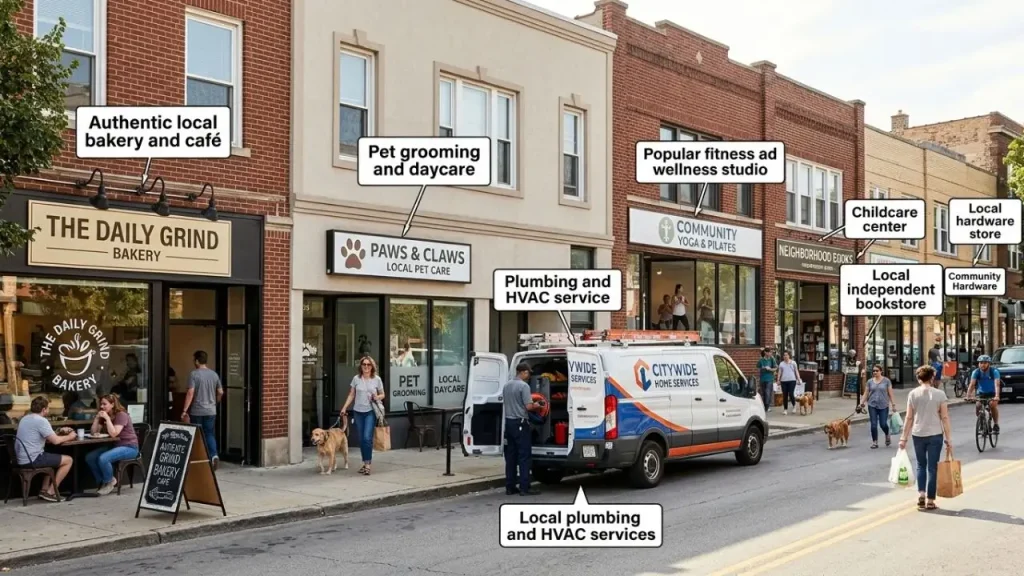
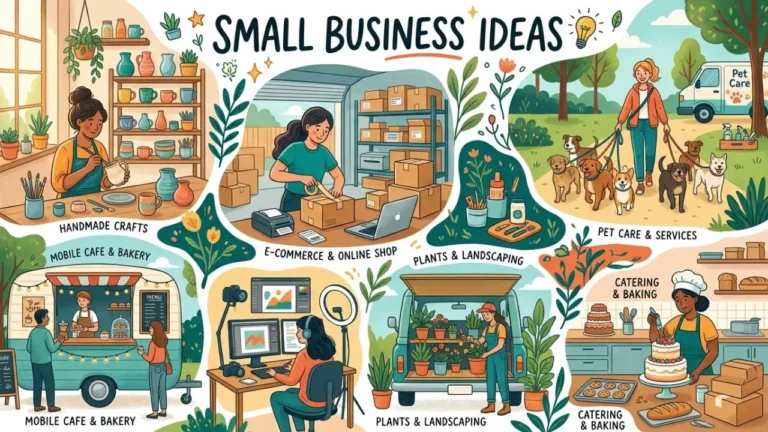
Not every successful business idea needs to have an international focus. Local businesses can be particularly attractive because they offer services that customers need regularly and within their immediate vicinity. Examples include cleaning, catering, repairs, tutoring, childcare, pet care, and various mobile services.
Furthermore, a local business model allows you to start with a small customer base and grow gradually. For instance, a self-employed electrician does not need to own a large company on day one; a few regular clients may be enough initially to gain experience and generate revenue. Additional staff, vehicles, or new services can be added later.
Repeat customers are especially valuable
One-off sales can bring in revenue, but regular customers often provide greater stability and predictability. A cleaning company, for example, could offer weekly or monthly appointments. A landscaper might develop seasonal maintenance contracts. An office supply company could handle regular deliveries for small businesses.
That is why, when developing a business idea, it pays to look beyond just securing that initial sale. A better question to ask is: Why would this customer come back in three months? If there is a compelling answer to that question, the business model often rests on a stronger foundation.
4. Business ideas for people with specialized skills

Expertise itself can be a valuable product. People with experience in specific fields can build a consulting, training, or coaching business around that knowledge. Examples include language instruction, tutoring, bookkeeping, technical consulting, professional training, and creative services.
Skills that are not easily mastered by everyone are particularly valuable. Someone with extensive experience using specific software can train other employees. A skilled tradesperson can share their knowledge or offer consulting services. A musician can give lessons. Someone with strong language skills can handle translation or proofreading work.
Expertise must be communicated clearly
High qualifications alone do not guarantee business success. Customers pay not just for knowledge, but for a solution. A good consultant must therefore be able to explain exactly what outcome the client can expect.
Instead of simply offering “business consulting,” a service could, for instance, be specifically tailored to small family businesses looking to better control their expenses. The more clearly the offer is defined, the easier it is for potential clients to see why they should pay for it.
5. Innovative Business Ideas and Small Niches

A business idea does not necessarily have to be based on a completely new product. Innovation can also mean offering an existing service in a way that is simpler, faster, more affordable, or more convenient. Many successful companies have improved upon existing concepts rather than inventing something entirely unknown.
Focusing on a small niche can actually be an advantage. A general repair service might appeal to a very broad target audience, whereas a specialized service catering to specific devices or a particular customer group can more easily establish a clear identity. This applies equally to sectors such as food, education, pet services, skilled trades, and many others.
Small-Scale Tests Reduce Risk
One of the most sensible approaches for new entrepreneurs is to test an idea on a small scale first. Instead of immediately incurring high costs for an office, large inventories, or multiple employees, one can first verify whether there is genuine interest from customers.
Let’s say someone wants to launch a mobile bicycle repair service. Before purchasing an expensive vehicle, the individual could start by testing which repairs are most in demand, using a limited service offering and a small number of customers. If there is indeed sufficient demand, the business can then be expanded step by step.
6. Turning an idea into a viable business model
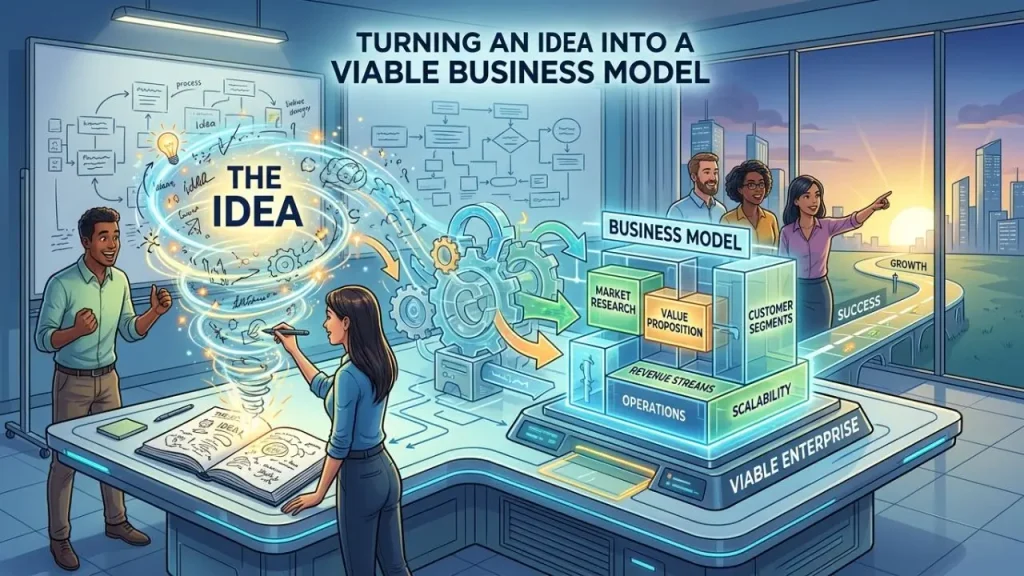
A good idea is just the beginning. There are several important steps between a concept and a functioning business. First, you should clarify who your target customers are, what problem is being solved, and why customers should choose this particular offering.
Next comes realistic cost planning. This should account for more than just obvious expenses; factors such as insurance, permits, transport, software, maintenance, packaging, taxes, and unforeseen costs can also play a role. A financial buffer is therefore particularly helpful when starting out.
The SBA explains, among other things, that start-up costs should be calculated prior to launch and that a break-even analysis can help in better estimating costs, revenue, and the sales figures required.
A simple business plan can prevent many mistakes
For a small business, a business plan does not have to be a complex document spanning dozens of pages. A clear, concise plan is often sufficient. It should cover aspects such as the offering, the target audience, key costs, potential revenue, required resources, and the next steps.
One simple question is particularly helpful: How many customers do I need for the business to break even? For example, if a service provider earns 100 euros per job and has monthly fixed costs of 1,000 euros, they need ten jobs just to cover those fixed costs. Naturally, additional expenses and taxes must also be factored in. Such simple calculations quickly reveal whether an idea is realistic.
Conclusion
Good business ideas need not be complicated or entirely new. Often, the best opportunities arise where people face a specific problem and are willing to pay for a practical solution. Services, local offerings, specialized expertise, product sales, and niche markets can all serve as promising starting points for a business.
The most important step is not merely making an idea sound appealing, but evaluating it realistically. Taking factors such as demand, costs, competition, personal skills, and potential profit margins into account leads to better decision-making. A small-scale test can often prove more valuable than a major investment.
Ultimately, a successful business is not built on a brilliant idea alone. Success hinges on delivering genuine value to customers, reliable execution, careful financial planning, and a willingness to refine the offering based on real-world experience.
Frequently Asked Questions About Business Ideas
1. Which business ideas are suitable for beginners?
Services—such as local service provision, tutoring, cleaning, repairs, or specialized consulting—can be attractive options for beginners. Depending on the specific activity, some of these can be started with a modest amount of initial capital.
2. Can you start a business with little money?
Yes. Some business models require only minimal upfront investment, particularly service-based businesses that rely primarily on your own time and existing skills. However, you should still plan for ongoing costs and set aside financial reserves.
3. How do I find a good business idea?
A good approach is to look for recurring problems in your own environment. Talking to potential customers can reveal which services are missing or how existing offerings could be improved.
4. Does a business idea have to be completely new?
No. A successful business idea does not have to be unique. You can successfully develop an existing offering further by focusing on better quality, faster service, a specific target audience, greater convenience, or a different approach.
5. How can I test a business idea before launching?
Start small and observe actual demand. Begin by offering a limited service or a small batch of products and gather feedback from real customers. This allows you to identify weaknesses before investing significant sums of money.


[…] you would like to discover more practical business ideas, you can also check out our comprehensive guide to various business […]