

Introduction
A dripping tap is annoying, and a clogged drain is a nuisance. However, if water suddenly starts leaking from a pipe or your basement begins to flood, a minor issue can escalate into a genuine emergency within minutes. It is precisely in these situations that many people search for a “plumber near me,” as they urgently need a qualified professional in their local area.
Proximity alone, however, should not be the only criterion for your choice. A tradesperson located just five minutes away is of little help if they lack the necessary experience, fail to provide transparent pricing, or cannot arrive for several hours. What matters most is a combination of availability, expertise, reliability, fair pricing, and professional service.
A skilled plumber can do far more than simply fix a leaky pipe. They can identify the root cause of a problem, contain the damage, and often prevent a minor repair from turning into costly water damage. This guide explains what to look for during your search, the services a plumber typically offers, and how to make a sound decision—even when you are pressed for time.
1. When You Need a Local Plumber
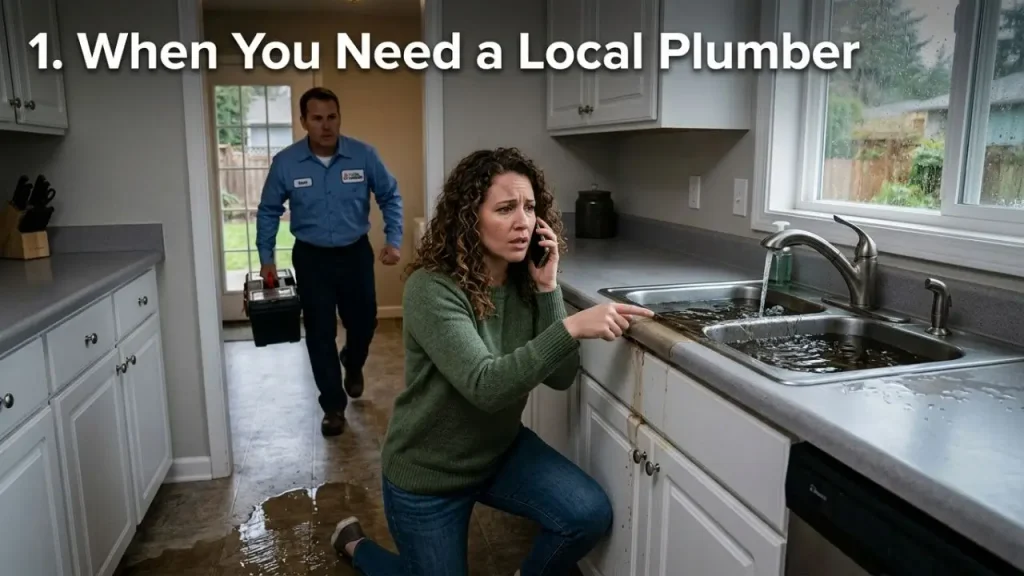
Not every plumbing issue requires an immediate professional repair. For instance, a slightly dripping tap can sometimes be fixed yourself, whereas a completely clogged drain or a damaged water pipe may require professional help. The right course of action depends on the severity of the problem and the risk of further damage.
Situations involving uncontrolled water leakage should be treated with particular seriousness. A burst pipe can quickly damage floors, walls, furniture, and electrical systems. Similarly, a severely overflowing sink or a toilet that won’t drain can rapidly escalate into both a hygiene issue and a financial burden.
Typical Reasons to Call a Plumber
Common tasks include fixing leaky taps, unclogging toilets, clearing slow-draining sinks, repairing faulty valves, addressing water pipe issues, and general plumbing repairs. Professionals are also frequently needed for the installation of new fixtures, sinks, toilets, or showers.
In older buildings, issues such as corrosion, worn-out piping, or recurring leaks may arise. In such cases, simply repairing the visible problem is not always sufficient. An experienced plumber should investigate the root cause and explain to the property owner which solutions make sense in the short term versus the long term.
2. How to find a reliable plumber nearby
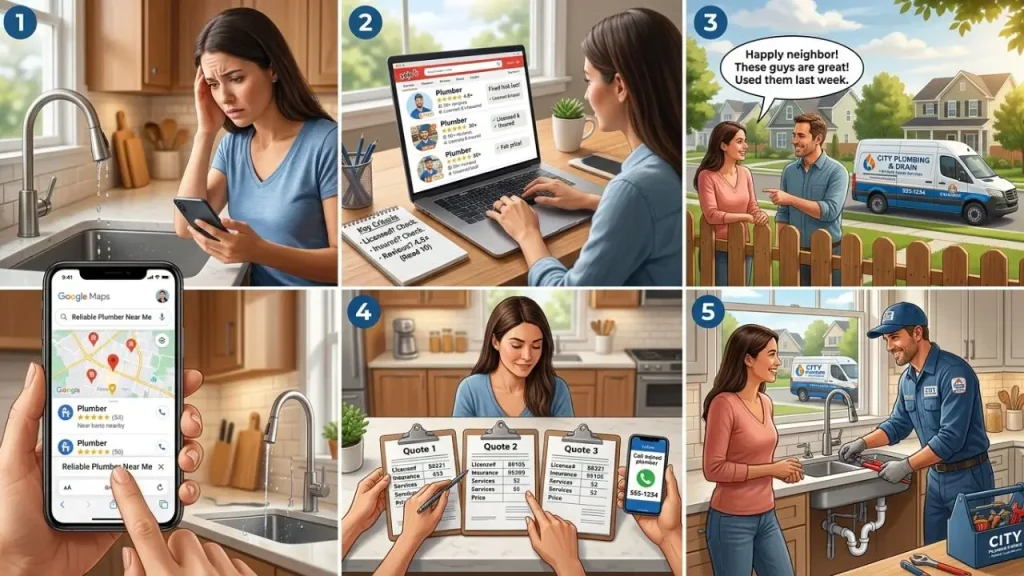
When water starts leaking or a toilet suddenly stops working, no one wants to spend an hour calling around to different tradespeople. Nevertheless, it pays to ask a few basic questions before hiring someone. A reputable plumber should be able to clearly state what services are offered, provide an estimated arrival time, and explain the billing process.
Also, pay attention to how professionally the tradesperson communicates. Are questions answered clearly? Do they ask about the problem before quoting a price? Does the plumber explain the potential causes? Such details can reveal a lot about a service provider’s work style. A professional business should not try to pressure the customer into making a decision by creating unnecessary urgency.
Proximity helps, but it isn’t everything
When searching for a “plumber near me,” a local provider is naturally an attractive option. A short travel time can be particularly valuable in an emergency. However, distance should always be weighed against availability and qualifications.
A plumber located slightly further away might be the better choice if they have proven experience with the specific problem and are available on short notice. For major jobs, specialized expertise can be even more important than minimizing travel time. A botched repair attempt can end up costing significantly more than a professional job.
Ask questions before hiring
Especially with non-urgent repairs, a few quick questions can be helpful:
- When can you be on-site?
- What services are included in the price?
- Is there a call-out fee?
- How are labor and materials billed?
- Is a cost estimate provided before major work begins?
- Is there a guarantee or warranty on the work performed?
Not every question can be fully addressed during an acute emergency. Nevertheless, a reputable tradesperson should be transparent about costs and procedures.
3. Services typically offered by a plumber
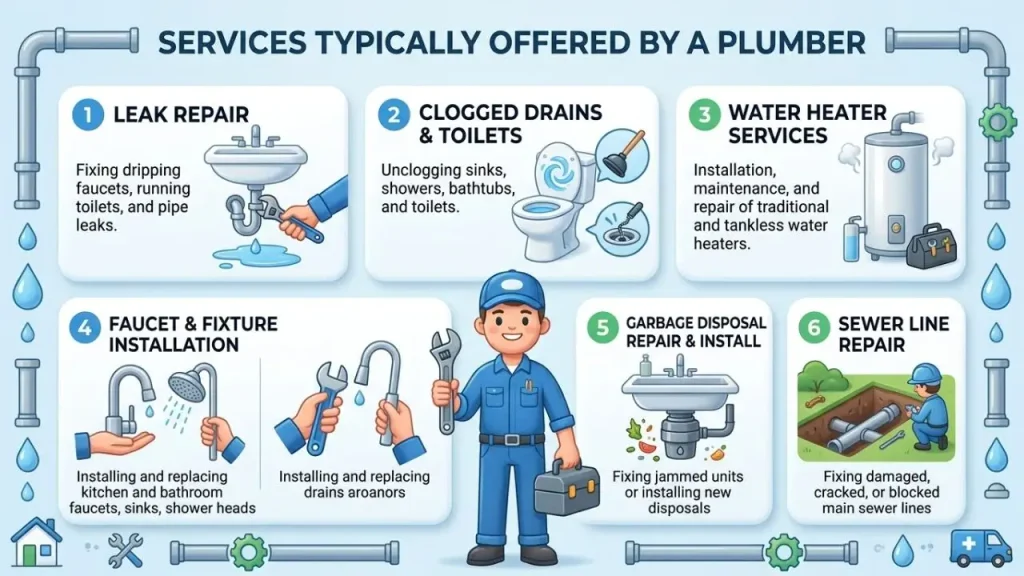
A plumber’s range of services is much broader than many people realize. Beyond simple repairs to faucets and toilets, professionals can work on water lines, drains, sanitary facilities, and various piping systems. Depending on the region and qualifications, this may also include heating or gas work, although specific tasks may require special certifications.
In the case of a clogged pipe, for example, the first step might be to attempt to clear the blockage using appropriate tools. However, if the problem recurs, the underlying cause should be investigated. A recurring blockage could indicate deposits, damaged pipes, or a deeper-seated issue.
Repair or replace?
An important decision involves whether a component should be repaired or completely replaced. Repairing a relatively new fixture may make sense. For components that are heavily corroded or have undergone multiple repairs, replacement might be more cost-effective in the long run.
A good plumber should explain both options rather than automatically recommending the most expensive one. The customer should understand the reasoning behind a proposed solution, taking into account factors such as age, condition, material, labor involved, and future reliability.
Plumbing installations are also part of the job
Anyone renovating a bathroom or modernizing a kitchen often needs assistance installing sinks, toilets, showers, or fixtures. Precision is crucial here, as minor errors can lead to leaks later on.
Before installation, it is therefore important to check whether existing connections and pipes are suitable for the new equipment. An experienced tradesperson can also point out if a planned installation requires adjustments to the existing infrastructure.
4. What a plumber might cost and what to look out for regarding prices
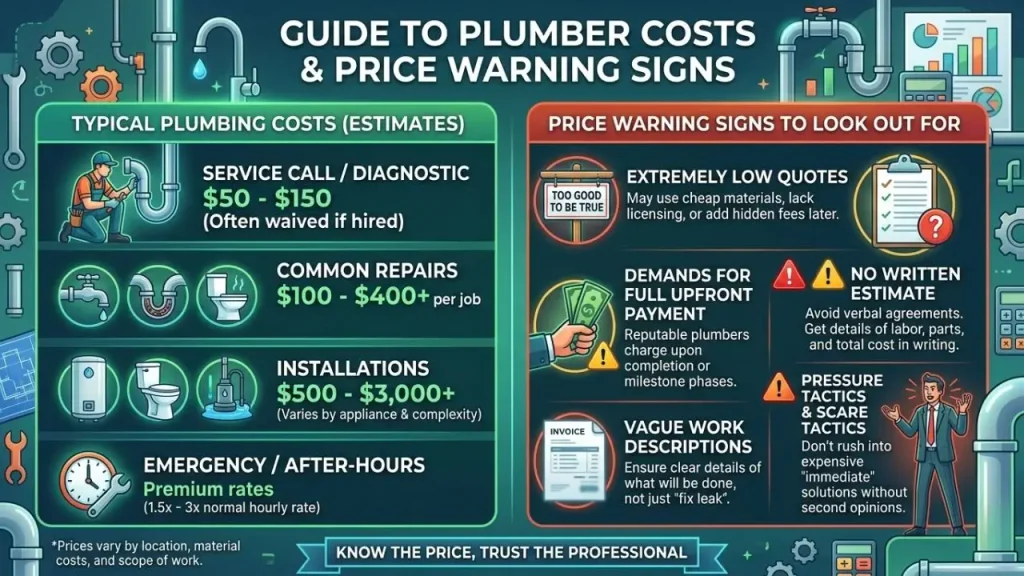
The cost of plumbing services can vary significantly. Key factors include the nature of the problem, the time required for the work, necessary spare parts, travel distance, and the timing of the service call. A standard appointment during regular business hours is often cheaper than an emergency call-out late at night, on weekends, or on public holidays.
When reviewing a cost estimate, it is important to pay close attention to what is included. A low base price may seem attractive at first, but it reveals little about the final bill if travel costs, labor, materials, or additional fees are charged separately.
Transparent pricing is a good sign
A reputable plumber should be able to explain how the costs are calculated. This does not mean that every detail must be determined down to the last cent before an inspection takes place. In the case of an unknown pipe problem, an exact price quote is often only possible after the tradesperson has assessed the situation on-site.
However, caution is advised if a provider demands a very high price without sufficient information or insists on immediate payment without clearly explaining the work involved. For major repairs, it may be wise to obtain multiple quotes, provided the situation does not require an immediate emergency response.
Speed is crucial in emergencies
When a water pipe bursts and large amounts of water escape, the decision on whom to call shouldn’t be based solely on the lowest price. The immediate priority is to stop the flow of water and prevent further damage. If possible, the main water supply should be shut off.
After that, you can call an emergency plumber. Even then, it pays to briefly ask about call-out charges and emergency service fees. Spending a few seconds on the phone can help you avoid unpleasant surprises on the final bill.
5. How to avoid future plumbing problems
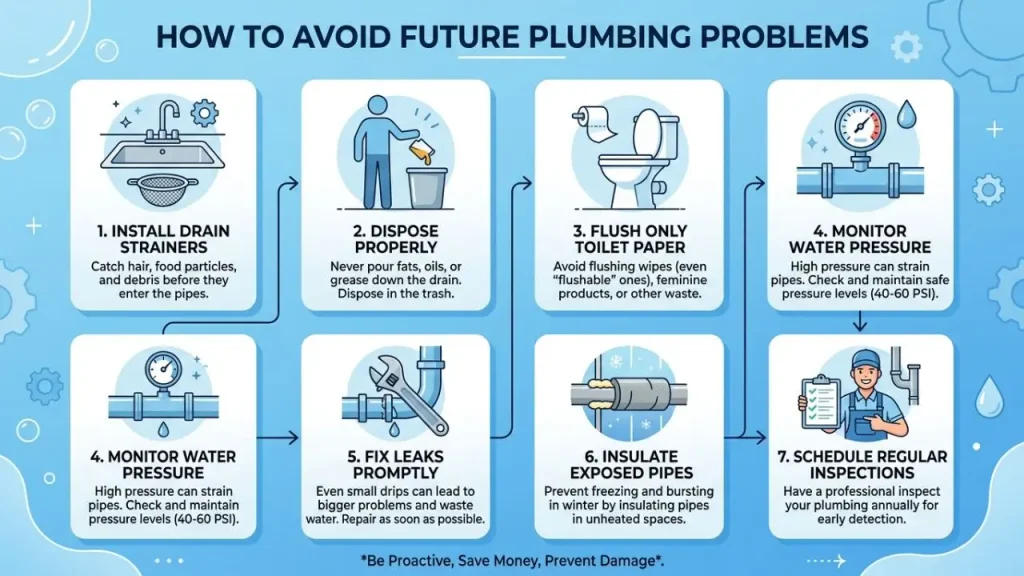
Sometimes, the best repair is the one that never becomes necessary in the first place. Regular inspections can help detect minor issues early on. A slowly dripping tap, a toilet making unusual noises, or a drain that is becoming increasingly sluggish should not be ignored for months.
Visible dampness on walls, under sinks, or inside cabinets also warrants attention. A small leak might look harmless at first, even as a larger problem develops behind the scenes. Damage can go unnoticed for a long time, especially with pipes that are difficult to access.
Regular maintenance can help homeowners catch small leaks before they become bigger problems. The EPA WaterSense program also provides practical home plumbing maintenance tips for water-using fixtures and systems.
Simple habits protect your plumbing
Many blockages can be prevented by keeping grease, large food scraps, and unsuitable materials out of the drain. Only items intended for disposal in toilets should be flushed. You should also avoid the indiscriminate use of harsh chemical drain cleaners, as they can damage certain types of piping or pose a hazard during future repairs.
It is also wise to know the location of shut-off valves and the main water supply. In an emergency, this knowledge saves valuable time. Knowing how to turn off the water often allows you to limit damage before a plumber arrives.
When to call in a professional
Even minor repairs can become problematic if the root cause is misjudged. A dripping connection might be easy to seal, but if the pipe itself is damaged or heavily corroded, a superficial fix may merely delay addressing the real issue.
Professional help is particularly advisable if water is seeping into walls or floors, a pipe repeatedly clogs, water pressure drops significantly, or a problem recurs despite your own repair attempts. A professional can assess the situation and determine whether a simple repair suffices or if more extensive work is required.
Conclusion
Searches for a “plumber near me” often arise when immediate assistance is required. However, the decision should not be based solely on proximity. A reliable plumber is characterized by experience, transparent communication, fair pricing, and meticulous workmanship.
A simple repair may suffice for minor issues. In contrast, professional help should be sought for severe leaks, recurring blockages, or damaged pipes. While a rapid response is crucial in an emergency, it is still advisable to clarify the expected fees and services beforehand.
Regularly inspecting plumbing systems, taking early warning signs seriously, and knowing how to quickly shut off the water supply in an emergency helps minimize the risk of major damage. And when professional help is needed, a quick check of the tradesperson ensures that an urgent search for a plumber leads to a good, reliable solution as quickly as possible.
Frequently Asked Questions
1. What does “plumber near me” mean?
“Plumber near me” refers to a local professional who handles repairs for water pipes, drains, or plumbing systems. People typically use this search term when they need such a specialist nearby.
2. When should I call a plumber immediately?
You should seek professional help as soon as possible in the event of a severe water leak, a burst pipe, an overflowing sewage system, or water damage already affecting floors and walls.
3. How do I find a good plumber in my area?
Compare availability, experience, services offered, and pricing. Before hiring someone, ask about travel costs, labor charges, and any potential additional fees.
4. How much does a plumber cost?
Costs depend on the type of repair, labor time, materials, travel expenses, and—if applicable—emergency service rates. For major jobs, it is best to clarify how costs are calculated before work begins.
5. Can I fix a clogged drain myself?
Minor clogs can sometimes be cleared using a plunger or appropriate mechanical methods. However, if the blockage is severe, recurring, or prevents water from draining entirely, it is advisable to call a professional.
6. Should I call the plumber first if there is a water leak?
If possible, you should first shut off the affected water supply or the main water line to prevent further leakage. You can then contact a plumber.
7. Why does my faucet keep dripping?
A worn-out washer or cartridge could be the cause. Depending on the fixture, replacing the specific faulty part may be sufficient. With older fixtures, however, replacing the entire unit might be the better option. 8. How can I spot a potential hidden water leak?
8. How can I detect a possible hidden water leak?
Damp spots, unusual sounds of running water, a musty odor, discolored walls, or an unexplained increase in water consumption can all indicate a leak. Such signs should be investigated.
9. Is a local plumber always the best choice?
A local plumber can be particularly convenient due to short travel times. However, other crucial factors include experience, availability, qualifications, transparent pricing, and the ability to professionally resolve the specific problem.
10. How can I prevent future plumbing issues?
Treat drains with care, avoid disposing of unsuitable materials down the toilet or sink, and address dripping faucets, slow drains, or damp spots promptly. Regular inspections can help prevent major repairs.


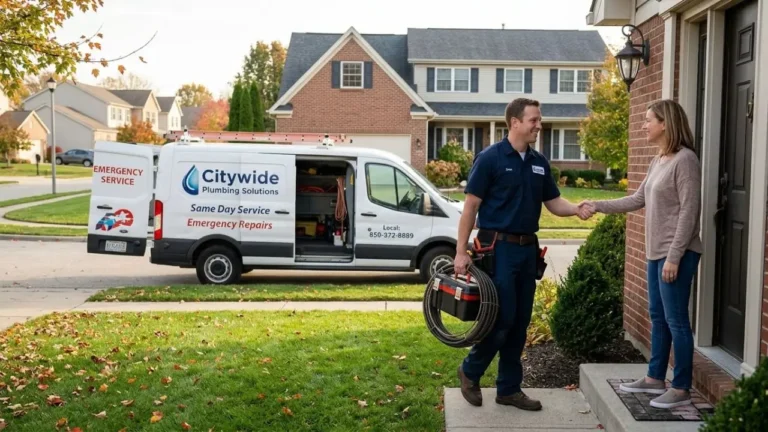
[…] during an emergency. If you want to find a reliable local plumber, you can use our guide—[Plumber Near Me]—to learn about key selection criteria and practical tips. A good professional service should be […]