
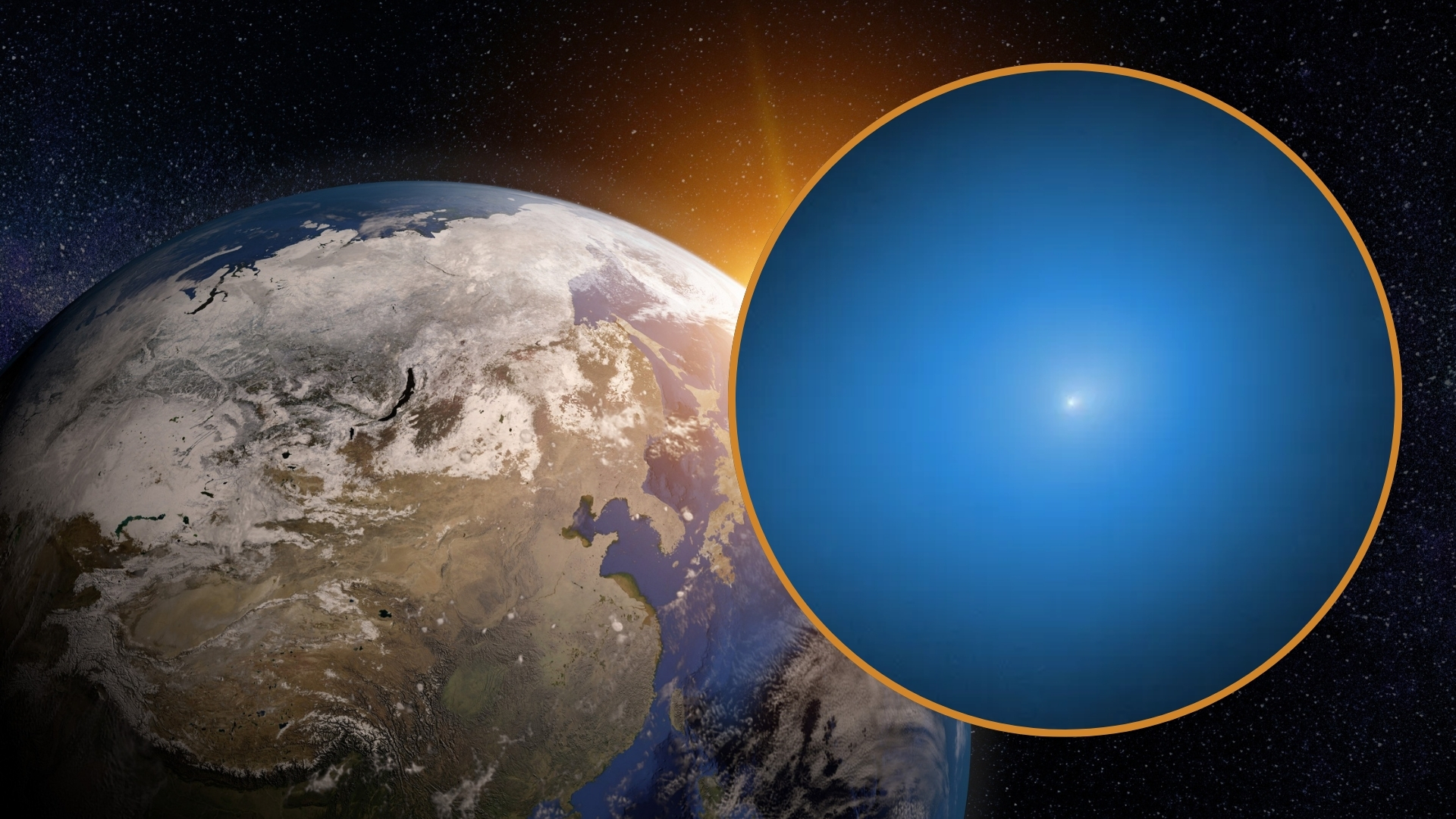

Space exploration has always fascinated humanity, especially when rare objects enter our Solar System from deep interstellar space. One such highly interesting and scientifically important object is interstellar comet 3I/ATLAS. Unlike regular comets that originate from within our Solar System, interstellar comets come from outside our cosmic neighborhood, carrying valuable information about distant star systems.
Interstellar Comet 3I/ATLAS Overview
Interstellar comet 3I/ATLAS is an interstellar object detected passing through our Solar System. The “3I” designation means it is the third confirmed interstellar object observed by scientists after ʻOumuamua (1I) and Borisov (2I). The “ATLAS” part refers to the telescope system that discovered it.
What makes interstellar comet 3I/ATLAS extremely important is that it did not originate from the Sun’s gravitational system. Instead, it traveled from another star system, possibly millions or even billions of years ago.
Discovery of Interstellar Comet 3I/ATLAS
The discovery of interstellar comet 3I/ATLAS was made using the Asteroid Terrestrial-impact Last Alert System (ATLAS), which is designed to detect near-Earth objects and space threats.
Astronomers noticed that the object had an unusual trajectory that did not match any known Solar System comet or asteroid. After detailed analysis, scientists confirmed that it was moving too fast and on a hyperbolic path—meaning it was not bound by the Sun’s gravity.
This confirmation classified it as an interstellar object, later named interstellar comet 3I/ATLAS.
Why Interstellar Comet 3I/ATLAS Is So Important
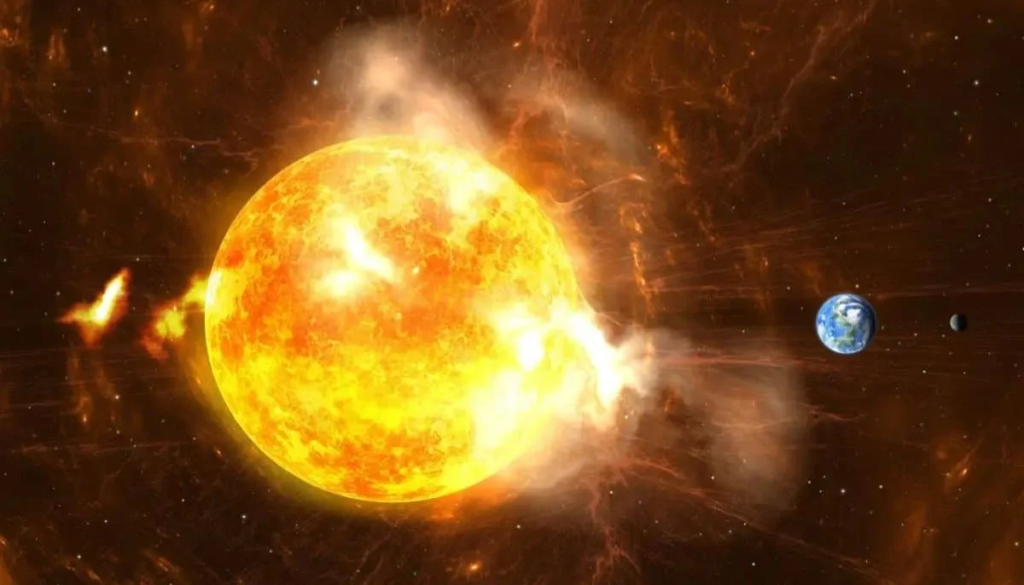
The importance of interstellar comet 3I/ATLAS lies in its origin. Unlike normal comets formed in the Oort Cloud or Kuiper Belt, interstellar comets provide direct material from other star systems.
Scientists study these objects because they can reveal:
- Composition of distant planetary systems
- Formation conditions of other stars
- Organic materials from other galaxies or systems
- Clues about how planets form outside our Solar System
Each observation of interstellar comet 3I/ATLAS helps astronomers expand their understanding of the universe.
Interstellar Comet 3I/ATLAS Trajectory and Path
One of the key features of interstellar comet 3I/ATLAS is its hyperbolic orbit. This means:
- It is not orbiting the Sun
- It entered from interstellar space
- It will eventually leave the Solar System
- Its speed is too high for gravitational capture
This path confirms its interstellar origin. Scientists use telescopes to track its movement and study its behavior as it passes through different regions of the Solar System.
Interstellar Comet 3I/ATLAS Composition Theories
Although direct sampling is impossible, scientists can estimate the composition of interstellar comet 3I/ATLAS using light analysis and spectroscopy.
Possible Composition Includes:
- Ice (water, methane, ammonia)
- Dust particles
- Carbon-based organic compounds
- Rocky materials
Like other comets, interstellar comet 3I/ATLAS likely has a nucleus made of frozen gases mixed with dust. However, its exact composition may differ depending on the star system where it originated.
Interstellar Comet 3I/ATLAS vs Other Interstellar Objects
Before interstellar comet 3I/ATLAS, scientists had already discovered two major interstellar objects:
1I/ʻOumuamua
- First interstellar object detected
- Discovered in 2017
- Highly unusual elongated shape
2I/Borisov
- First confirmed interstellar comet
- Discovered in 2019
- Showed clear cometary activity
Now interstellar comet 3I/ATLAS adds another important example, helping scientists compare different interstellar bodies and improve models of space formation.
Interstellar Comet 3I/ATLAS Scientific Importance
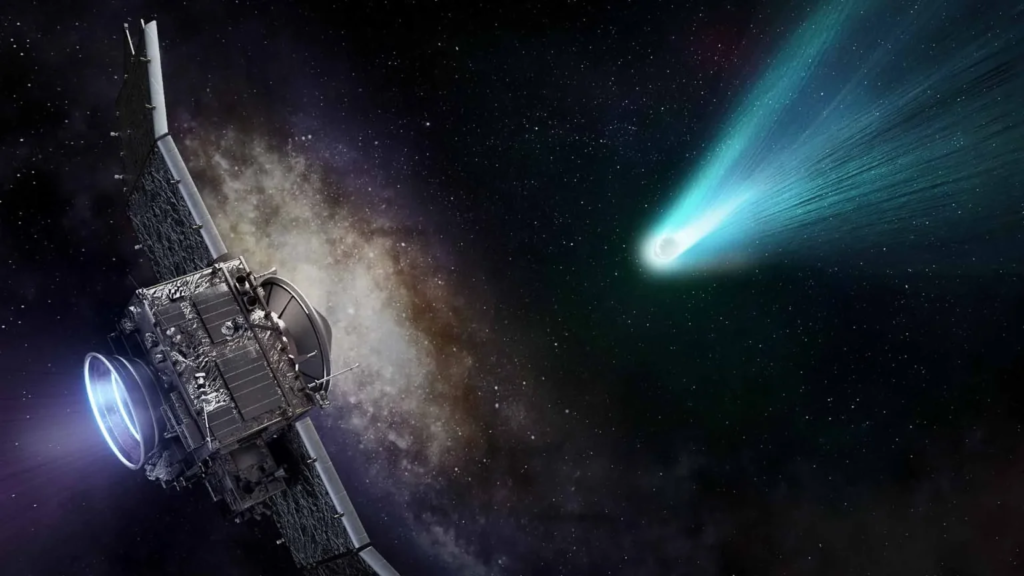
The scientific value of interstellar comet 3I/ATLAS is extremely high because it acts like a natural space probe from another star system.
Key Scientific Benefits:
- Helps study planetary formation in other systems
- Provides clues about chemical diversity in the galaxy
- Improves understanding of comet evolution
- Helps refine interstellar travel models
Every observation of interstellar comet 3I/ATLAS contributes valuable data for astrophysics.
Interstellar Comet 3I/ATLAS and Telescope Observations
Astronomers use advanced telescopes to study interstellar comet 3I/ATLAS, including ground-based and space-based instruments.
They analyze:
- Brightness changes
- Tail formation
- Gas emissions
- Speed variations
These observations help determine how the comet reacts to solar radiation and heat as it moves closer to the Sun.
Interstellar Comet 3I/ATLAS Behavior Near the Sun
As interstellar comet 3I/ATLAS approaches the Sun, it begins to heat up. This causes:
- Ice to vaporize
- Formation of a glowing coma
- Development of a tail pointing away from the Sun
This behavior is similar to regular comets, but interstellar comets can sometimes behave differently due to unknown compositions.
Interstellar Comet 3I/ATLAS and Origin Theories
Scientists believe that interstellar comet 3I/ATLAS may have originated from:
- A distant star system
- A disrupted planetary system
- A region of interstellar space with high comet activity
It may have been ejected due to gravitational interactions with giant planets or passing stars.
Its journey could have taken millions or even billions of years before entering our Solar System.
Interstellar Comet 3I/ATLAS and Future Research
Future research on interstellar comet 3I/ATLAS will focus on:
- Detailed spectral analysis
- Tracking chemical composition changes
- Studying dust and gas emissions
- Comparing with future interstellar objects
With new telescopes like the Vera C. Rubin Observatory, scientists expect to discover more interstellar objects similar to interstellar comet 3I/ATLAS in the coming years.
Interstellar Comet 3I/ATLAS and Space Exploration Importance
The discovery of interstellar comet 3I/ATLAS highlights how dynamic and active our universe is. It also shows that interstellar travel of objects is not rare but part of a larger cosmic cycle.
These objects may eventually help humanity understand:
- How common life-building materials are in the universe
- Whether other star systems have similar chemistry to ours
- How planetary systems evolve over time
Interstellar Comet 3I/ATLAS Risks to Earth
Scientists confirm that interstellar comet 3I/ATLAS does not pose any threat to Earth. Its trajectory keeps it at a safe distance, and it will eventually exit the Solar System.
Most interstellar objects pass through without any collision risk, and this one is no exception.
Interstellar Comet 3I/ATLAS Future Exit from Solar System
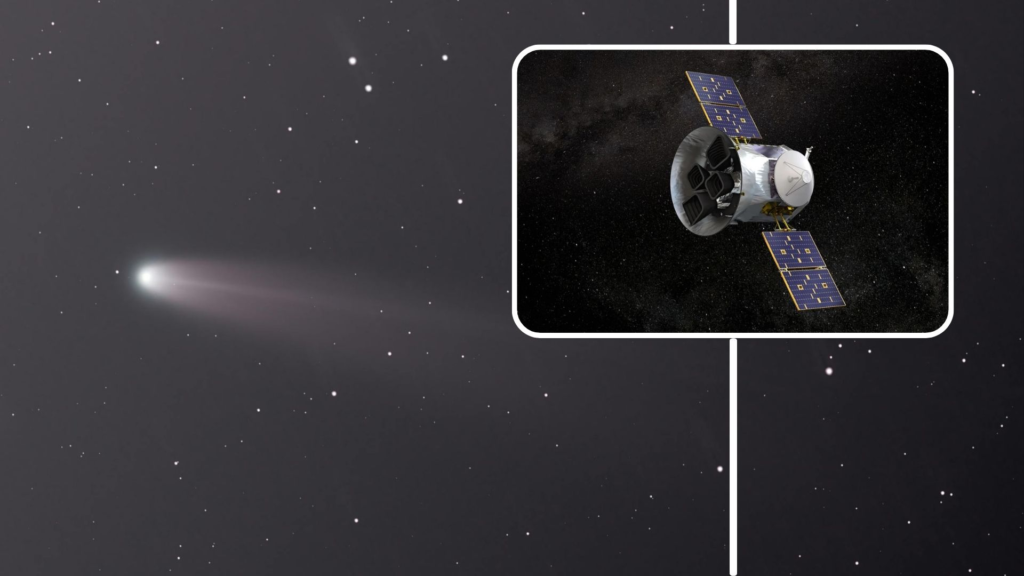
After completing its journey through the inner Solar System, interstellar comet 3I/ATLAS will continue moving outward into deep space.
It will never return because its velocity is too high to be captured by the Sun’s gravity. It will once again become a wandering object in interstellar space.
Interstellar Comet 3I/ATLAS and Human Curiosity
The discovery of interstellar comet 3I/ATLAS fuels human curiosity about the universe. It reminds us that our Solar System is just a small part of a much larger cosmic environment filled with unknown objects and phenomena.
Each discovery like this brings us closer to understanding the universe beyond our own planetary system.
Conclusion: Why Interstellar Comet 3I/ATLAS Matters
The study of interstellar comet 3I/ATLAS is extremely important for modern astronomy. It provides direct evidence of material traveling between star systems and helps scientists understand the broader structure of the universe.
Although it will only pass through our Solar System briefly, its impact on science is long-lasting. It serves as a reminder that space is constantly active and filled with mysteries waiting to be discovered.
In conclusion, interstellar comet 3I/ATLAS is not just a comet—it is a messenger from another star system carrying secrets of the universe.
